
Here are must do things to do Cape Town. Food tells the story of a place better than almost anything else. If you’re visiting Cape Town and want to learn more about the city’s cultures, history and traditions, a Cape Malay cooking experience is one of the most rewarding ways to do it. If you’d like to watch instead of read, click here.
We recently spent a Sunday morning in a welcoming family home, learning how to prepare a traditional three-course Cape Malay meal. The experience was hosted by two wonderful ladies who guided us through each step of the cooking process while sharing stories about Cape Malay culture, ingredients and traditions.
Although we are already familiar with many aspects of Cape Malay cuisine, we still walked away having learned something new. You can book here!
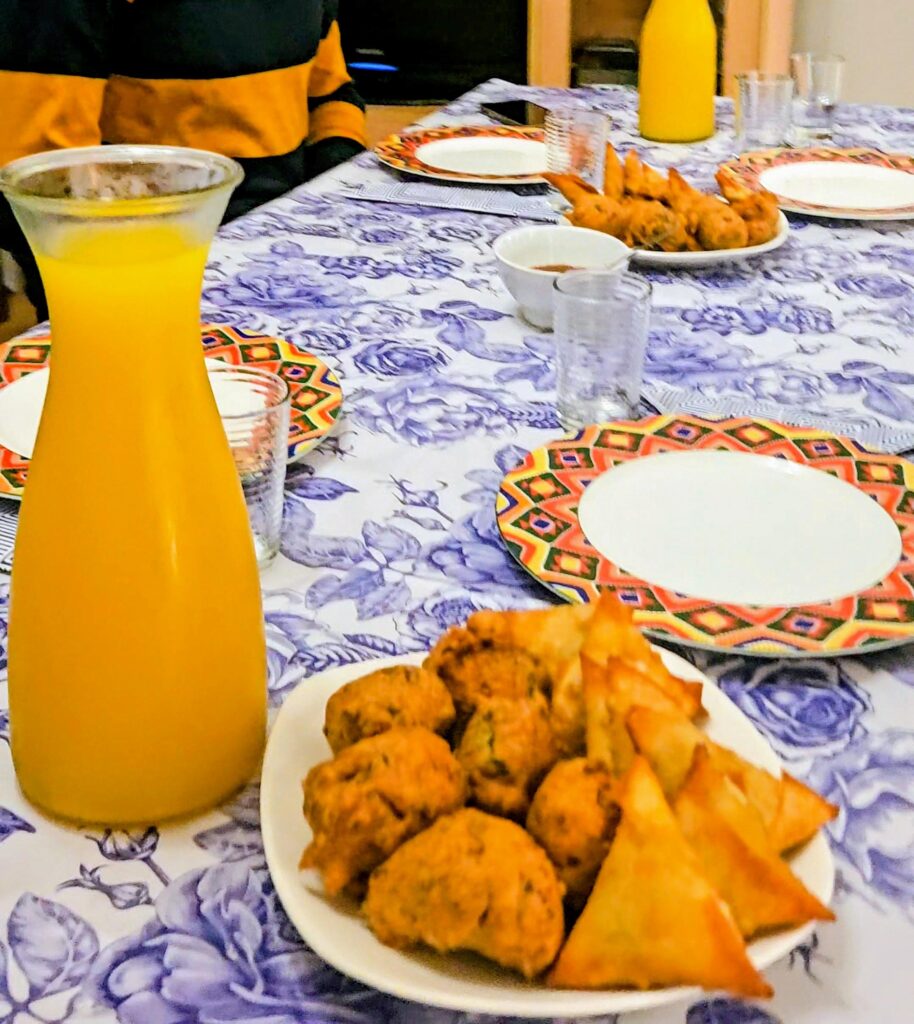
The experience begins with the starter course. We prepared chilli bites and samoosas from scratch while enjoying a refreshing falooda drink. Having all the ingredients laid out and ready made the process approachable, even for those with little cooking experience. It’s also a lot of fun to make everything yourself in a group setting, because there’s less pressure and it becomes fun as the conversations are flowing.
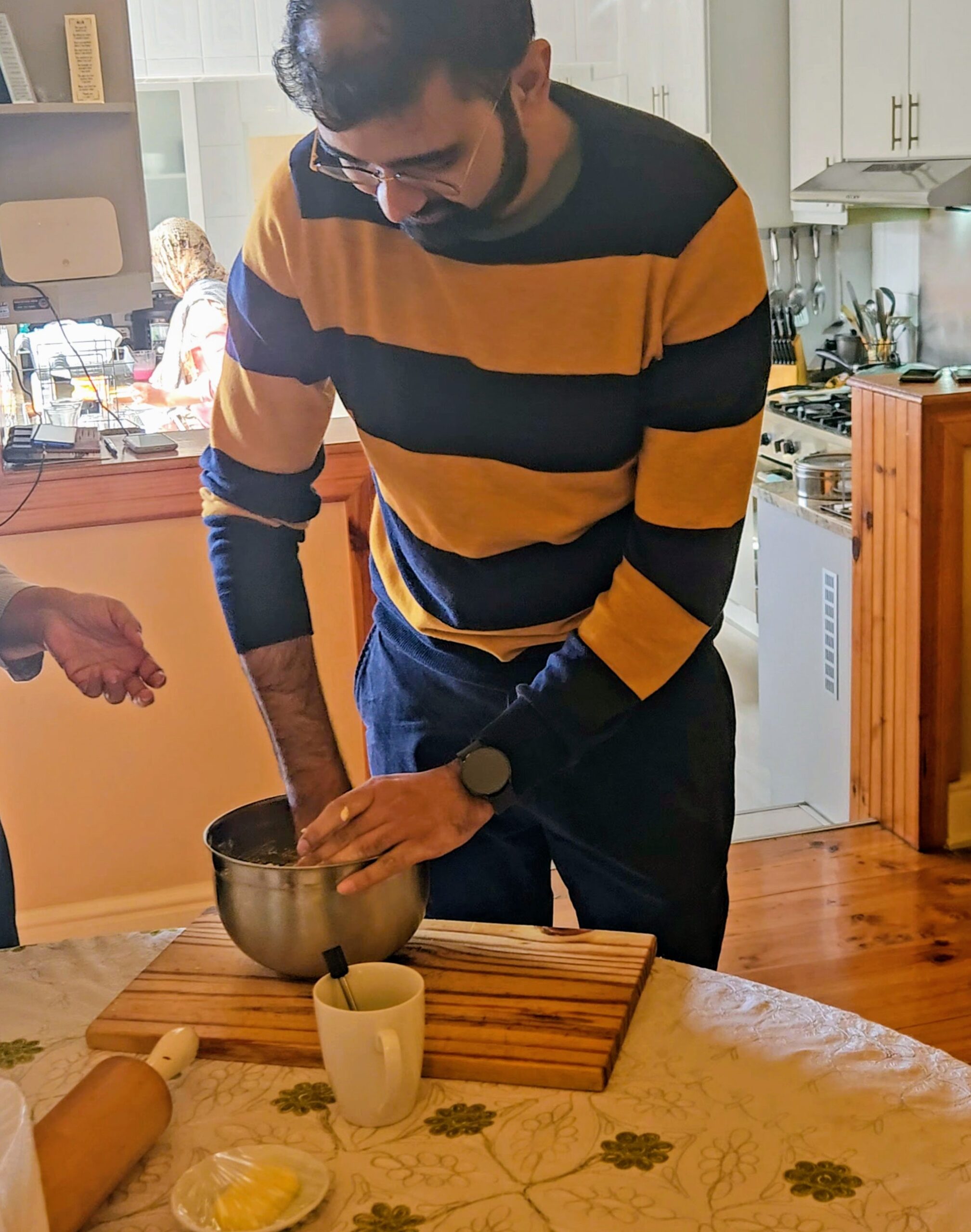
The main course focused on a traditional Cape Malay curry served with flaky homemade rooti. One of the highlights for us was making the rooti. Aliasgher somehow ended up kneading dough for almost the entire group, which led to plenty of laughter and conversation along the way. Watching the rooti come together from a simple ball of dough into soft, flaky layers gave us a new appreciation for the effort behind a meal many people take for granted. We also learnt how to store such rooti in the freezer for later use!
The curry itself was rich, aromatic and packed with flavour. It tasted exactly as a Cape Malay curry should, and we also learnt about the different and similar spices that give Cape Malay food its distinct and unique flavour.
For dessert, we prepared koeksisters, one of South Africa’s most loved sweet treats. Learning how they are made and hearing the stories attached to them added another layer to the experience, although since this takes long, the hosts finished up for us so we could enjoy our meal.
What we enjoyed most was that the experience was not only about cooking. Throughout the morning, there were countless conversations about family traditions, food customs, ingredients, and the history of the Cape Malay community. Many of these insights would be difficult to learn from a guidebook or a museum visit.
Once the cooking was complete, everyone sat down together to enjoy the meal they had helped prepare. Sharing food around a table with people who had started the morning as strangers created a relaxed and welcoming atmosphere. We ended up talking about the most random things, and some of the conversations were so deep! That’s when we realised what an amazing bonding activity this can be too.
For visitors to Cape Town, this experience offers far more than a cooking class. It provides a genuine introduction to one of the cultures that has helped shape the city.
We booked through GetYourGuide, and the process took only a few minutes. The platform has become one of our favourite ways to discover and book experiences while travelling, and this was another excellent find.
If you’re looking for an authentic cultural experience in Cape Town, this is one we would happily recommend.
Bookmark this for your the next time you’re looking for something fun to do! Want more travel recommendations, both in and outside South Africa? Follow us @afor_adventures or subscribe to our food & travel blog – always honest, always helpful.
#Cape Malay culture #Cape Town experiences #Cape Town travel #Cooking classes Cape Town #Cultural tourism #Food experiences #South African food #Things to do in Cape Town #Traditional cuisine #Western Cape travel
 Harties Cableway North West: the hidden gem that rivals Table Mountain
Hartbeespoort things to do: The Upside Down House. Is it worth the visit?
Harties Cableway North West: the hidden gem that rivals Table Mountain
Hartbeespoort things to do: The Upside Down House. Is it worth the visit?
 Pipe Track hike to Camps Bay: the beginner friendly route with the best views in Cape Town
 Khao Hom Cape Town: Delicious halaal Thai food
 Persian Peacock Cape Town serves yummy, authentic Iranian food, hiding in plain sight
 Birthday Freebies Durban: The Ultimate Guide to Happiness
 Roti and Chai Durban is the delicious restaurant that turned a timeless pairing into a whole experience
 Olifantsbos Shipwreck Trail Cape Point: the hidden hike most people don’t know about
 Family Budget Accommodation Oudtshoorn: Ravenscliff Manor is a Victorian Airbnb that proves budget travel can be beautiful
 Turkish Doner Cape Town: the delicious shawarma spot Cape Town needs to know about