If you’re one of those people who thinks there’s nothing to do in Moshi unless you’re climbing Mount Kilimanjaro, I have some news for you haha.
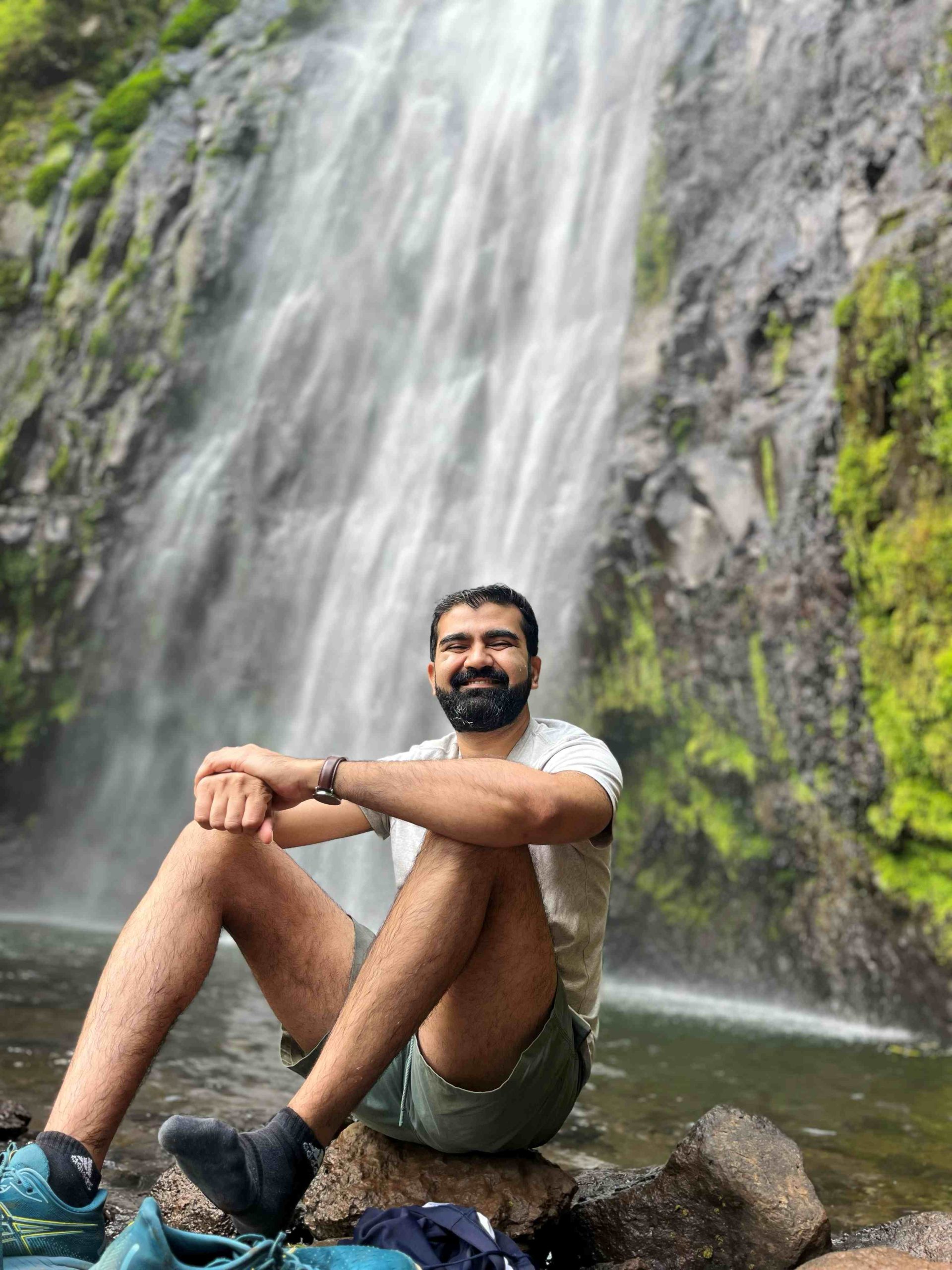
One of the things I was most excited about during our trip to Moshi was visiting Materuni Waterfalls, and after actually experiencing it, I can confidently say that it was one of my favourite parts of our trip!
I love waterfalls, and I love hiking, although I have a very complicated relationship with stairs 😂. So naturally, when we heard that we could hike to a waterfall on the slopes of Mount Kilimanjaro, it went straight onto our list.
We actually planned quite a full day, starting with Materuni Waterfalls, followed by a coffee tour in the village and then a visit to Chemka Hot Springs. It sounded like a lot to squeeze into one day, but we were determined to make the most of our time in Moshi.
And honestly, even if we had only visited the waterfall, I think I would have been happy.
Watch the YouTube Video Instead
Getting to Materuni Waterfalls from Moshi
Materuni Waterfalls is located near Materuni Village, on the slopes of Mount Kilimanjaro, approximately 40–45 minutes from Moshi town by car.
The drive itself was beautiful, and it was one of those experiences where having a guide made such a difference because we were learning things before we’d even reached the waterfall.
There are a few ways to get there, and if you have your own vehicle, you could drive yourself. However, I’d definitely recommend arranging transport with a guide, especially if you’re unfamiliar with the roads.
The road starts off tarred, then becomes increasingly pothole-filled, and eventually gets really rough. We were travelling in a vehicle similar to a Toyota Alphard, and even then, we could feel how bumpy it was!
You could also take a Bajaj, which is a three-wheeled tuk-tuk commonly used in Tanzania, but I personally wouldn’t recommend it for this journey. Given the condition of the roads, I imagine it would be a much less comfortable experience, and it would probably take longer too.
Of course, you could arrange to meet a guide at the village instead, but we really appreciated having someone with us throughout the journey because he explained so much about the area.
On the way, we also passed people selling paintings and handmade items, so if you’re interested in taking something home, it’s worth keeping an eye out.
Why Having a Guide Made the Experience So Much Better
One of my favourite things about travelling is learning about the places we’re visiting, and I especially love it when a guide can explain things that I would otherwise have walked straight past without noticing.
Our guide told us about Mount Kilimanjaro and how the mountain is divided into five ecological zones, each with different vegetation, temperatures, altitudes and environmental conditions. These differences also influence how people live and what they can grow in the surrounding areas.
I found this SO interesting because, although I’d obviously heard of Kilimanjaro, I hadn’t really thought about how much the environment changes as you move up the mountain.
He explained how the mountain has everything from rainforest to alpine desert and snow-covered areas, which is pretty incredible when you think about it.
We also learned about the villages surrounding Kilimanjaro and their relationship with the mountain, including the importance of protecting the natural environment.
And then there were all the plants!
Eucalyptus Trees, Vicks and Some Very Interesting Local Knowledge
At one point, our guide showed us eucalyptus trees, and naturally, I got very excited because I LOVE the smell of Vicks haha. I genuinely believe Vicks is a cure for almost everything. Whether that’s scientifically accurate is another conversation, but I stand by my appreciation for it 😂.
Our guide explained that eucalyptus trees aren’t indigenous to Tanzania and were introduced from Australia. He also told us how people in the area use the leaves for steaming, including during COVID, and how eucalyptus oil is used locally for certain aches and pains.
I found it fascinating hearing about these practices, particularly because it’s one thing to recognise a plant and another to learn how people in a particular community use it.
He also explained how eucalyptus trees had originally been planted around certain boundaries near the mountain, but had since spread into other areas, including the valleys.
It’s these little things that make me so glad we chose to have a guide. We could easily have walked past the trees without giving them a second thought.
Seeing Coffee Growing on the Slopes of Kilimanjaro
Another thing we came across was coffee! Now, I know coffee comes from a plant, but I don’t think I’d ever properly thought about what it looks like before it’s processed.
The coffee cherries were reddish and reminded me of raspberries, which I found so surprising. Our guide explained that the beans we eventually drink are found inside these cherries.
We also learned about Arabica coffee and how altitude and growing conditions affect its quality. According to our guide, coffee in this region grows particularly well at higher elevations on the mountain slopes, where conditions are different from those in Moshi town.
Something else I hadn’t realised was that coffee plants benefit from shade. Rather than growing completely exposed to direct sunlight, they’re often planted beneath taller trees, which help filter the light.
How cool is that?! We were going to learn much more about coffee during our tour later that day, but getting to see the plants growing naturally along the route was such a lovely introduction.
Hiking to Materuni Waterfalls
Once we reached Materuni Village, it was time to start walking towards the waterfall.
The trail takes you through a beautiful green landscape, and I really enjoyed being surrounded by so much vegetation. There are also some lovely views along the way, and the closer you get to the waterfall, the more you begin to hear the water in the distance.
One phrase we kept hearing was pole pole, which means slowly, slowly in Swahili.
Our guide explained that it’s particularly important when climbing Kilimanjaro because your body needs time to adjust to changes in altitude, but it’s also very good advice for a hike like this.
There’s no need to rush, and honestly, going slowly gives you more time to enjoy the surroundings and learn about everything you’re passing.
We were also greeting everyone we passed on the trail, which made us laugh because we realised how South African we were being haha.
How Difficult Is the Materuni Waterfalls Hike?
I’d describe the hike as moderate, although the difficulty will depend on your fitness, the weather and how comfortable you are walking on uneven ground.
On the way to the waterfall, there wasn’t too much climbing, which I was very happy about because, as I’ve mentioned, I love waterfalls but I absolutely hate stairs.
I actually prefer a natural incline to climbing steps, and for most of the walk, I found the trail manageable.
However, there are some slippery sections, especially as you get closer to the waterfall, and you do need to pay attention to where you’re stepping.
I nearly slipped at one point because I was moving aside to let someone pass. There was grass next to the path, and I hadn’t realised that there wasn’t actually solid ground underneath the part I was stepping towards!
Thankfully, someone managed to grab me before I fell, but it was a good reminder that even when a trail doesn’t feel particularly difficult, you still need to be careful.
I would definitely recommend wearing proper walking or hiking shoes rather than flip-flops. Even with my hiking shoes, I found some sections slippery.
The walk back also involves more climbing because you’re retracing the route in the opposite direction. It wasn’t impossible by any means, but I did notice the difference.
And if you’re combining the waterfall with the coffee tour, be prepared for a little more uphill walking afterwards!
Finally Seeing Materuni Waterfalls Moshi!
I don’t think I can properly explain how happy I was when we finally reached the waterfall.
Even before we got right up close, I could see how tall it was, and I was already so excited.
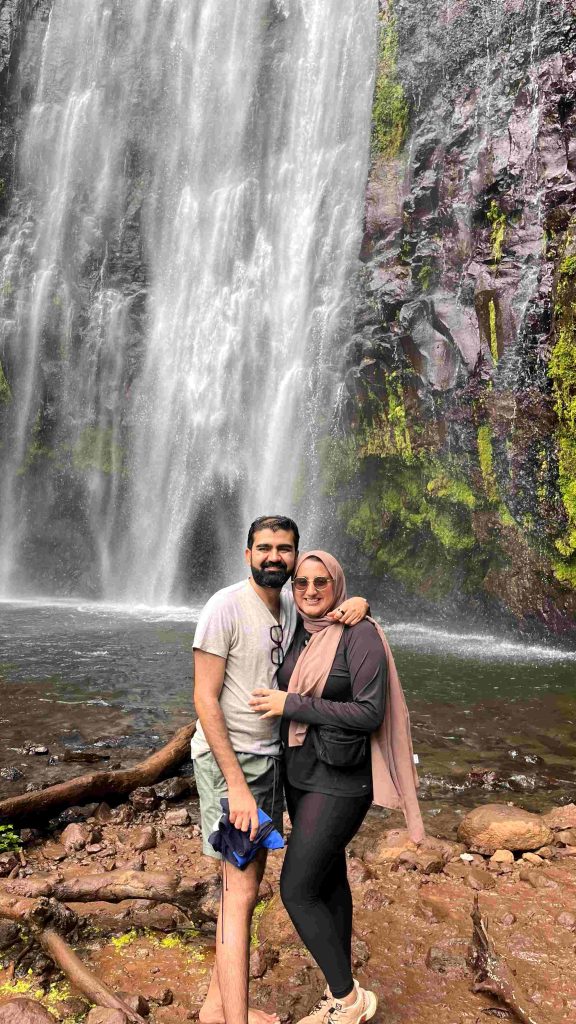
Our guide told us that Materuni Waterfalls is approximately 90 metres high, and standing there looking up at it, I could believe it!
It was SO beautiful.
I remember saying that I was chuffed, which isn’t even a word I use very often, but apparently that was the only way my brain could express how happy I was haha.
The waterfall is surrounded by greenery, and there’s something so lovely about standing in the middle of that landscape with the sound of the water all around you.
Our guide also took some stunning photographs of us, and somehow managed to do it in about five seconds. I was genuinely impressed!
We spent some time admiring the waterfall before making our way a little closer to the water.
Can You Swim at Materuni Waterfalls?
You can get into the water near the waterfall, although I would definitely recommend being careful because the rocks and surrounding ground can be slippery.
And just so you know, the water is FREEZING!
I had actually forgotten to pack my swimming clothes, which was a bit annoying, but thankfully I was wearing activewear that dries fairly quickly, so it wasn’t a complete disaster.
Aliasgher got into the water, and hearing him react to how cold it was was honestly hilarious 😂.
I decided to test it with my hand first, and he was absolutely right. It was incredibly cold!
Our guide explained that the water comes from the mountain, and considering Kilimanjaro’s high-altitude environment, the temperature wasn’t particularly surprising.
There was also a lovely breeze around the waterfall, and between the sound of the water, the scenery and the excitement of finally being there, I was just ridiculously happy.
I remember joking that this is why it’s useful to have a partner: one of you can experiment while the other one watches and enjoys the experience haha.
But seriously, I was so happy that I almost felt a little tipsy from the excitement. Clearly, waterfalls do wonderful things to my brain chemicals.
If you love being outdoors, I think you’ll understand exactly what I mean.
What Was the Weather Like?
We visited in the morning, which worked really well for us because we had other activities planned for later in the day.
By the time we started heading back, it was around 10:30 AM, and the sun was beginning to feel warmer.
Interestingly, the area immediately around the waterfall still felt quite cool because of the shade and the water, but we could definitely feel the sunshine as we walked back along the trail.
I was actually glad we’d done the hike in that direction, with the cooler part of the morning on our way to the waterfall and more sunshine on the way back.
Of course, the experience may be different depending on the season and weather conditions, but I’d personally recommend going earlier in the day, particularly if you’re planning to combine the hike with other activities.
Combining Materuni Waterfalls With a Coffee Tour
After visiting the waterfall, we continued towards the coffee tour, which was also part of our day in Materuni.
This involved some additional uphill walking, and I’m not going to lie, I found that section a little harder than the walk to the waterfall.
It was still manageable, but by then we’d already been walking for a while, and the extra elevation was definitely noticeable.
The coffee tour itself was such a fun experience because we got to learn about the process of making coffee, from the cherries all the way to the final drink, and even participated in making our own.
I’ve written a separate post about the Materuni coffee tour because there’s so much to share about that experience too!
If you have the time, I’d definitely recommend doing both activities while you’re in the area rather than travelling all the way to Materuni for only one of them.
Tips for Visiting Materuni Waterfalls
Based on our experience, these are the things I’d recommend keeping in mind when planning your visit:
- Consider hiring a guide. We learned so much about Kilimanjaro, the surrounding villages, plants and coffee cultivation that we would otherwise have missed.
- Wear proper shoes. The trail has uneven and slippery sections, especially closer to the waterfall, so I wouldn’t recommend flip-flops.
- Bring swimming clothes if you want to get into the water. I forgot mine, and although my activewear worked, it would have been much easier to come prepared.
- Expect very cold water. Even if the weather in Moshi is warm, the water at the waterfall is a completely different story!
- Be careful when moving aside on narrow parts of the trail. My almost-fall happened because I assumed there was solid ground beneath some grass.
- Take your time. As our guide kept reminding us, pole pole. There’s no need to rush, and the scenery is worth enjoying.
- Be prepared for a rough drive. The road becomes quite bumpy as you approach the village, so factor that in when choosing your transport.
- Allow extra energy for the return walk and coffee tour. The climb back and the additional uphill sections can feel harder than the initial walk to the waterfall.
- Consider combining activities. We visited the waterfall, did the coffee tour and then continued to Chemka Hot Springs, making it a full day of exploring around Moshi.
Is Materuni Waterfalls Worth Visiting?
Without a doubt! I had such a wonderful time visiting Materuni Waterfalls, and what made the experience particularly memorable was that it wasn’t just about reaching the waterfall.
We learned so much about Mount Kilimanjaro, saw coffee growing on the mountain slopes, discovered plants and their local uses, walked through a beautiful green landscape and got to experience an absolutely stunning waterfall.
And all of this without having to climb Kilimanjaro itself!
I think that’s one of the things I really want people to know about Moshi. There’s so much more to do here than people sometimes realise, and you can have some genuinely wonderful experiences even if climbing Africa’s highest mountain isn’t on your itinerary.
If you enjoy hiking, waterfalls, nature or simply learning about the places you visit, I’d definitely recommend adding Materuni Waterfalls to your Moshi itinerary.
And if you’re anything like me, you might find yourself standing in front of the waterfall, ridiculously happy, wondering why you didn’t visit sooner haha.
Happy adventuring!
Want more things to do ideas or travel guides? Follow us @afor_adventures, check out our itineraries, or subscribe to our blog.
Leave a Reply