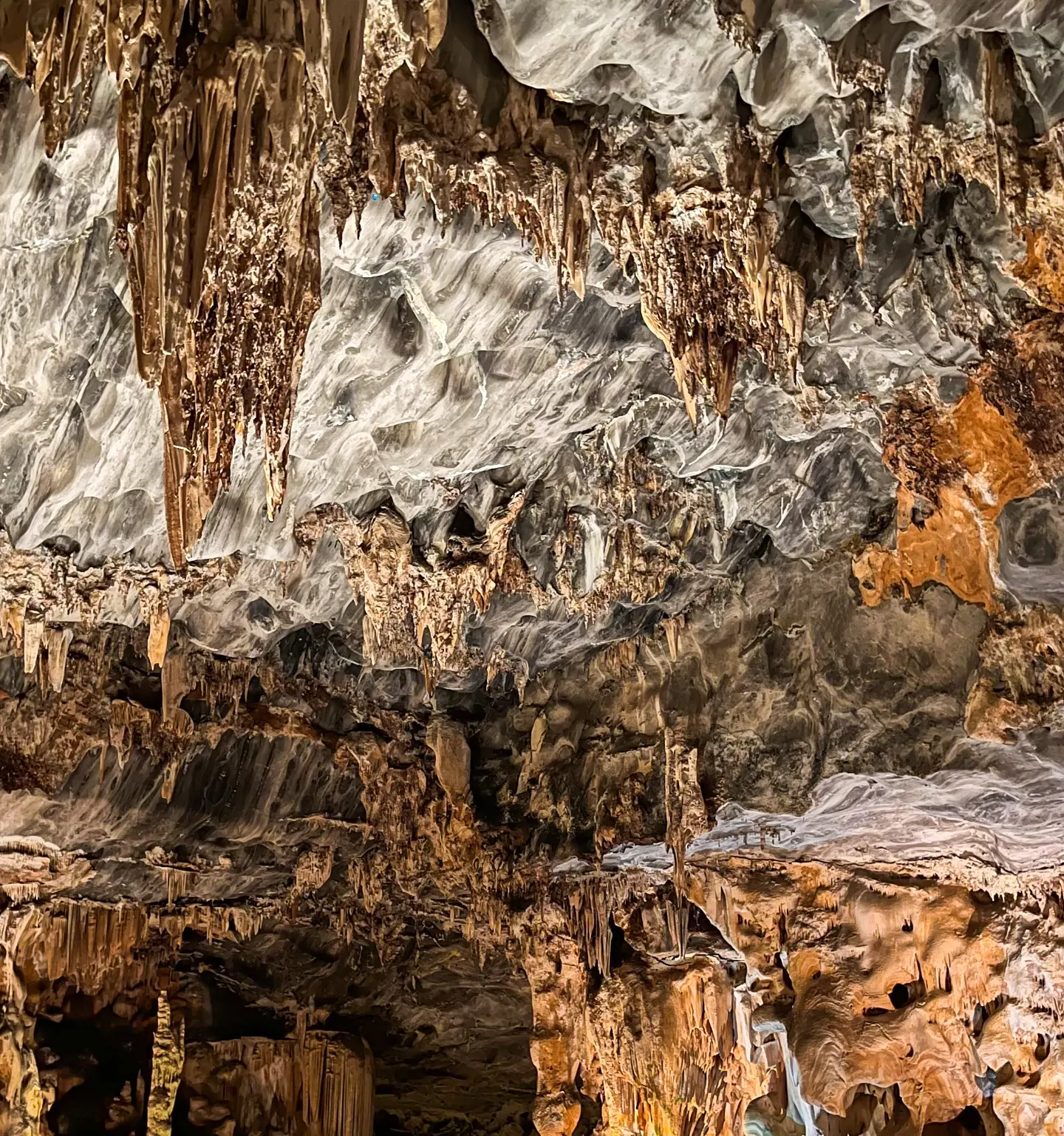
After years of hearing people talk about the Cango Caves, we finally visited during a trip to Oudtshoorn and immediately understood why they are considered one of South Africa’s most iconic natural attractions. If you love geology, history, caves or simply seeing something that leaves you speechless, this is one stop you should not skip. You can see our post here.
Located about 30 kilometres outside Oudtshoorn in the Klein Karoo, the Cango Caves are one of the oldest tourist attractions in South Africa and one of the country’s most impressive natural wonders. We’ve been waiting years to visit, and it was definitely worth making the trip. It holds a huge historic significance – indigenous Khoisans occupied these caves as early as the stone ages.
The cave system is famous for its vast chambers, towering rock formations and fascinating history. Standing inside these enormous caverns, it is difficult to comprehend how much time it took for nature to create them.
Choosing Between the Heritage and Adventure Tour
Visitors can choose between two guided experiences.
The Heritage Tour is the most popular option and takes approximately one hour. It follows an easy route through the three largest chambers and introduces visitors to the history, geology and cultural significance of the caves. Tours depart hourly between 9am and 4pm. On this tour, you get to see a ton and learn so much, there’s no way you won’t leave mesmerised.
We took the heritage tour that runs every hour with experienced guides taking you through the caves and sharing with you intricate details and some really cool facts about rock formations. You will enter the cave through a gate structure where you will be greeted by models depicting Khoisans who lived there and the spaces that they occupied.
From there, your guide will take you to the first chamber of the first cave. This part of the cave was also occupied by Khoisans centuries ago. Your guide will show you how so many rocks spill from either the top or the bottom of the cave to form stalactites (dropping from the ceiling) or stalagmites (rising from the floor). These formations occur through water seeping through the caves over hundreds of years, creating calcium carbonate and the formation.
Since this isn’t an overnight process, it’s even more amazing to see a formations that looked like the Leaning Tower of Pisa, and another that depicted Cleopatra’s Needle. We also had a whole new appreciation for all the light inside when we saw that the Khoisans basically used one tiny candle in that immense and almost absolute darkness.
The Adventure Tour takes visitors deeper into the cave system and involves squeezing through narrow passages, climbing and crawling through tight spaces. It lasts around 90 minutes and is not recommended for anyone with claustrophobia. If you’re not sure what tour you should opt for, there is a test you can do at the entrance to the caves. The team has built a replica of the kind of passages you’ll have to squeeze through, and you can use that to see how comfortable you feel.
You can book your tickets for either experience here – the prices range between R200 and R400 depending on the ticket type and season you’re visiting in.
Walking Through History at the Cango Caves
The experience begins before you even enter the cave itself. Near the entrance, displays and exhibits introduce visitors to the people who once occupied these caves. From there, your guide leads the group into the first massive chamber.
This section of the cave was once inhabited by Khoisan communities, and hearing how they lived in near-total darkness gave us a whole new appreciation for the space. Today, the caves are beautifully illuminated, but imagining life here with only a small flame for light is difficult to comprehend.
Stalactites, Stalagmites and Nature’s Artwork
One of the first things your guide explains is the difference between stalactites and stalagmites. Stalactites hang from the ceiling. Stalagmites rise from the ground. Simple enough.
What is harder to grasp is how slowly they form. Over countless years, water seeping through the limestone deposits tiny amounts of calcium carbonate, gradually creating the spectacular formations visitors see today.
As you move through the chambers, you’ll encounter formations that have been given names because of the shapes they resemble. Some look like famous landmarks, while others resemble people, animals or everyday objects.
One of the most famous is Cleopatra’s Needle, a towering formation that has become one of the cave’s best-known features. As the tour continues, the scale of the caves becomes even more impressive.
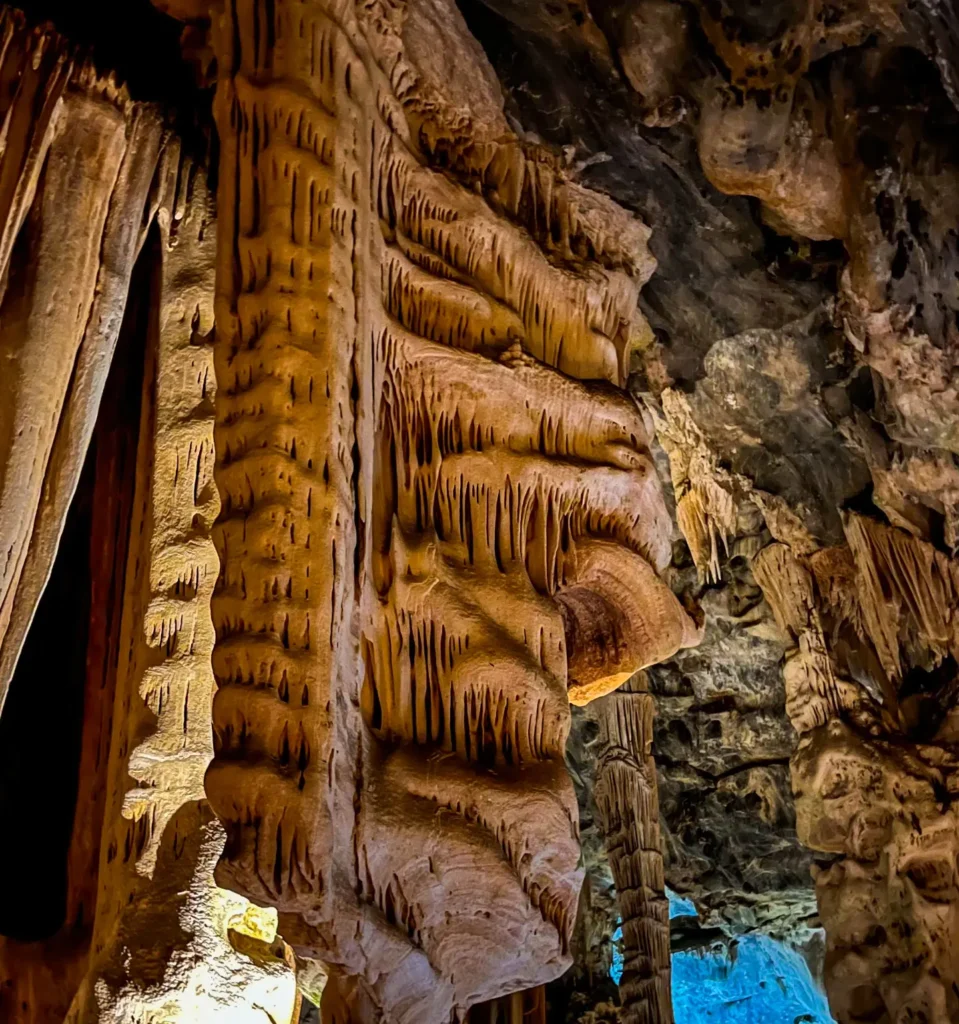
Each chamber feels different from the last. One room contains formations that guides have nicknamed after a honeymoon scene and rows of babies. Another chamber is home to the famous African Drum, a translucent rock formation that produces a drum-like sound when demonstrated by the guides.
There are countless small details, stories and geological features that make every section of the tour interesting. The guides do an excellent job of balancing history, geology and humour throughout the experience.
Things to Know Before You Visit
The caves maintain a fairly constant temperature throughout the year, making them comfortable to visit regardless of the season. Comfortable shoes are recommended, and photography is allowed.
Booking ahead is generally recommended, especially during busy periods, although walk-ins may sometimes be accommodated depending on availability. Tours run throughout the day and can fill up during holiday seasons.
Additionally, if you are visiting after a storm, it is worth checking whether the caves are open to visitors, as sometimes, for safety reasons, they won’t be.
Is the Cango Caves Worth Visiting?
Absolutely. We expected to enjoy the caves. We did not expect to spend the entire tour staring upward in amazement. The combination of natural beauty, fascinating history and knowledgeable guides makes this one of the most memorable experiences in the Klein Karoo.
And despite spending an hour underground, it still felt like we had only scratched the surface of everything there is to see. That’s probably the sign of a place worth visiting!
Want more Garden Route or travel guides? Follow us @afor_adventures, check out our itineraries, or subscribe to our blog.
Leave a Reply